Why traders still pick MT4 over newer platforms
MetaQuotes stopped issuing new MT4 licences a while back, steering brokers toward MT5. But most retail forex traders stayed put. The reason is straightforward: MT4 does one thing well. More than a decade's worth of custom indicators, Expert Advisors, and community scripts only work with MT4. Switching to MT5 means porting that entire library, and most traders don't see the point.
I spent time testing both platforms side by side, and the gap is smaller than you'd expect. MT5 adds a few extras like more timeframes and a built-in economic calendar, but the charting feels about the same. Unless you need MT5-specific features, there's no compelling reason to switch.
Setting up MT4 without the usual headaches
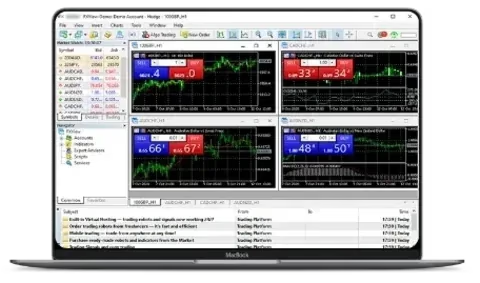
The install process is quick. What actually causes problems is the setup after install. By default, MT4 loads with four charts squeezed onto one window. Close all of them and start fresh with the markets you care about.
Templates are worth setting up early. Build your go-to indicators once, then right-click and save as template. Then you can apply it to any new chart in two clicks. Small thing, but over time it adds up.
Something most people miss: go to Tools > Options > Charts and check "Show ask line." MT4 only shows the bid price on the chart, which makes entries appear wrong until you realise the ask price is hidden.
MT4 strategy tester: honest expectations
The strategy tester in MT4 lets you run Expert Advisors against historical data. Worth noting though: the accuracy of those results comes down to your tick data. Standard history data from MetaQuotes is modelled, meaning the tester fills gaps mathematically. If you're testing something that needs accuracy, download real tick data from a provider like Dukascopy.
Modelling quality is more important than the headline profit number. Anything below 90% indicates the results shouldn't be taken seriously. Traders sometimes show off backtests with 25% modelling quality and can't figure out why the EA fails in real conditions.
This is one area where MT4 genuinely outperforms most web-based platforms, but it's only as good as the data you give it.
MT4 indicators beyond the defaults
MT4 ships with 30 default technical indicators. The average trader uses maybe a handful. However the platform's actual strength comes from community-made indicators coded in MQL4. There are a massive library, spanning basic modifications to elaborate signal panels.
The install process is painless: place the .ex4 or .mq4 file into the MQL4/Indicators folder, restart MT4, and you'll find it in the Navigator panel. The risk is quality. Publicly shared indicators vary wildly. A few are solid tools. Many are abandoned projects and can freeze your terminal.
When adding third-party indicators, check the last update date and whether users mention bugs. A poorly written indicator doesn't only show wrong data — it can freeze MT4.
Risk management settings most MT4 traders ignore
You'll find a mt4 brokers few native risk management tools that most traders skip over. First worth mentioning is maximum deviation in the order window. This defines the amount of slippage is acceptable on market orders. Without this configured and the broker can fill you at whatever price is available.
Stop losses go without saying, but the trailing stop function are worth exploring. Right-click an open trade, select Trailing Stop, and define the pip amount. The stop follows automatically as the trade goes into profit. It won't suit every approach, but on trending pairs it reduces the temptation to stare at the screen.
None of this is complicated to set up and they take some of the guesswork out of trade management.
EAs on MT4: what to realistically expect
Automated trading through Expert Advisors have obvious appeal: program your strategy and stop staring at charts. The reality is, a huge percentage of them lose money over any meaningful time period. Those sold with perfect backtest curves are often over-optimised — they worked on historical data and break down once market conditions change.
None of this means all EAs are useless. Some traders develop custom EAs to handle well-defined entry rules: time-based entries, calculating lot sizes, or exiting positions at fixed levels. These utility-type EAs work because they do mechanical tasks that don't require discretion.
When looking at Expert Advisors, use a demo account for a minimum of two to three months. Running it forward in real time is more informative than backtesting alone.
Using MT4 outside Windows
MT4 was built for Windows. If you're on macOS deal with a workaround. The traditional approach was emulation, which was functional but had visual bugs and occasional crashes. A few brokers now offer Mac-specific builds wrapped around compatibility layers, which work more smoothly but still aren't built from scratch for Mac.
MT4 mobile, on both Apple and Android devices, work well for monitoring open trades and making quick adjustments. Doing proper analysis on a 5-inch screen is pushing it, but adjusting a stop loss while away from your desk is genuinely handy.
It's worth confirming if your broker provides a native Mac build or just a wrapper — it makes a real difference day to day.